
All modelling falls into three categories: constrain, infer, simulate. Only the first reduces possibility. The second selects among possibilities. The third demonstrates consequences of a choice. Confusing these steps is the root of most error.
If the Earth has rapidly reoriented in the past, the resulting inertial mismatch between the solid Earth and its fluid envelopes would drive high-velocity surface transport. The atmosphere, hydrosphere, and unconsolidated materials would be mobilised along coherent trajectories dictated by the rotation geometry, producing large-scale, directionally organised flow fields. These flows would imprint persistent anisotropic signatures into the geological and geomorphological record, expressed through aligned erosional features, sediment transport pathways, and coherent structural overprints.
In this study, these signatures are formalised as a measurable geometric field against which candidate rotational configurations can be evaluated. By constructing a transport-based misalignment functional over the sphere and evaluating it across all possible Euler axes, we quantify the degree to which observed directional structures are compatible with rigid-body reorientation.
This is the first explicit attempt to recover putative reorientation geometry directly from surface anisotropy using a global, frame-invariant metric.
Methodology (Simplified)
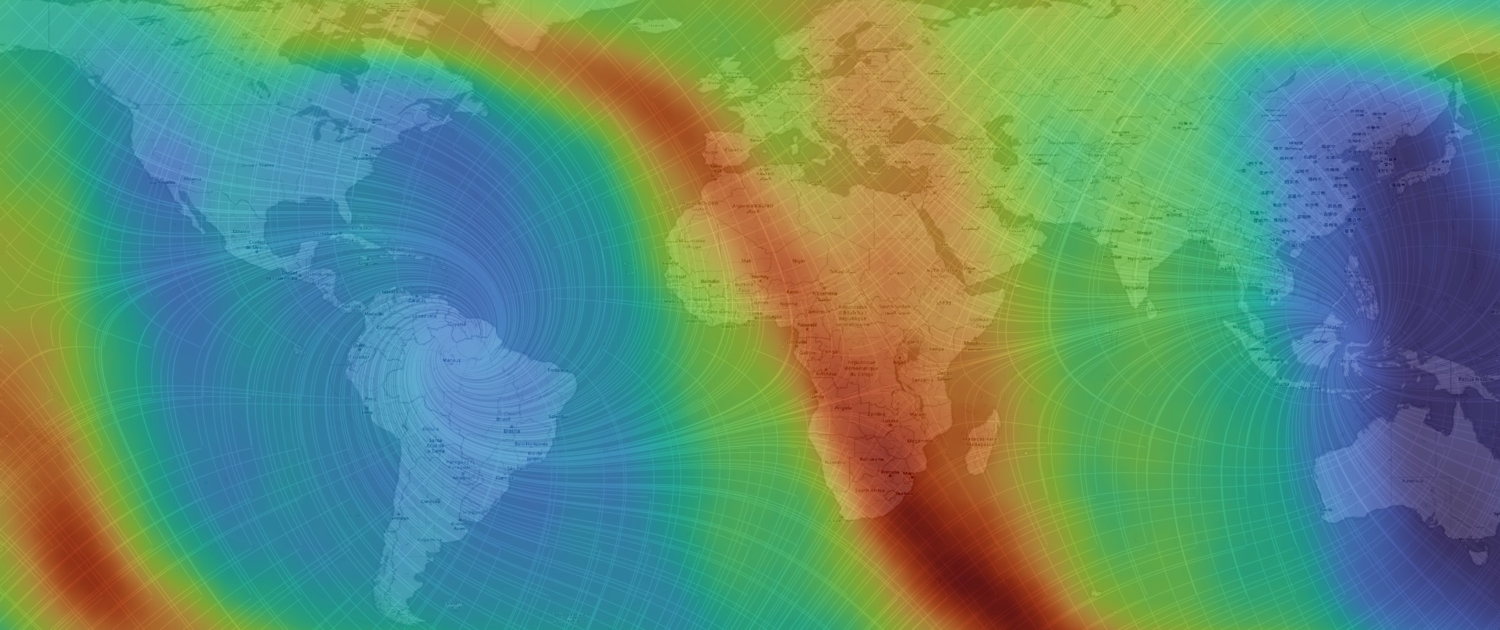
Imagine a sphere with a directional texture like grain or flow lines. Place a compass-like divider on its surface, fixing one leg at a point (the candidate Euler pole) and letting the other trace a path as the sphere rotates. This tracing leg stays in contact with the surface, continuously sampling the texture.
We treat the anisotropic field as a surface texture on the sphere and evaluate candidate Euler poles by rotating the sphere about each pole while sampling the texture along induced trajectories. The variance of the sampled field (M) quantifies the degree to which the imposed kinematics preserve anisotropic coherence. Poles minimizing this variance correspond to rotation axes perpendicular to the dominant anisotropic plane, while high-variance poles reflect oblique, coherence-disrupting transport.
As the tracing point encounters changes in local anisotropy, it introduces disturbance in the divider. This disturbance is defined as the variance of the sampled anisotropy along the trajectory for a given candidate pole, denoted M in this study. We treat the anisotropic field as a surface texture and evaluate candidate Euler poles by rotating the sphere about each pole while sampling along the induced trajectories. The variance M quantifies how well the imposed kinematics preserve anisotropic coherence. Poles that minimise this variance correspond to rotation axes aligned perpendicular to the dominant anisotropic plane, while high-variance poles reflect oblique, coherence-disrupting transport.
If the fixed point is near the true axis, perpendicular to the dominant anisotropic plane, the traced path follows the surface fabric smoothly, the sampled orientation is coherent, and the measured variance is minimised. If the fixed point is far from this axis, the traced path cuts across the anisotropy, repeatedly crossing gradients. The sampled signal becomes heterogeneous, and variance increases.
The Earth Speaks
By systematically relocating the fixed point across more than 2,500 positions spanning the globe, and repeating the analysis, we construct a global map of variance for each candidate rotation pole.
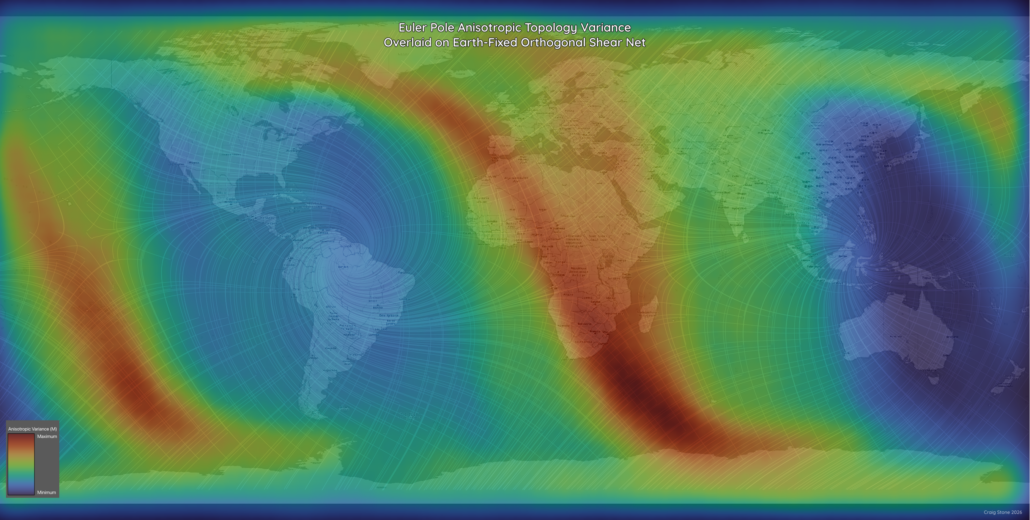
This map projects anisotropic coherence into Euler pole space. High-variance regions (red) correspond to incompatible Euler configurations, while low-variance regions (blue–purple) indicate strong compatibility. On a planet that has not undergone rapid true polar wander, this field would be expected to appear heterogeneous and unstructured.
It does not.
The field exhibits a clear structure. The symmetry suggests the most likely Euler configurations are roughly halfway between the high-variance bands – a pattern consistent with the ECDO Euler. My previous work quantified anisotropic structure throughout the core, mantle, lithosphere and geomagnetic field and this study extends that analysis to the surface. In my opinion, it represents some of the strongest geometric evidence yet found for rapid polar reorientation.
Draft Paper : https://nobulart.com/media/mach.pdf
Code & Data : https://nobulart.com/media/mach.zip
ECDO by @EthicalSkeptic : https://theethicalskeptic.com/2024/05/12/exothermic-core-mantle-decoupling-dzhanibekov-oscillation-ecdo-hypothesis/
Buy me a coffee : https://buymeacoffee.com/nobulart
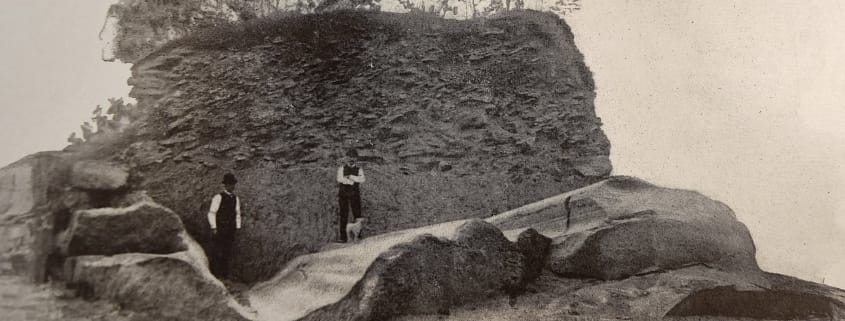
The drift is a remarkable stratum of clay, sand, gravel, and far-from-source boulders seemingly flung by some careless hand over the northern portions of Europe and North America. Some of this debris has been moulded into distinctive ridges (moraines), rounded hills (drumlins), and long sinuous ridges (eskers). Any theory of drift formation must account for these singular accumulations as well as an immense family of scratches, lake basins, and sundry gougings.

“Just as in the case of all other countries, the earliest pages in the Geological Record of South Africa are most fragmentary and utterly confusing; much remains to be done before even the outlines can be reconstructed. It must suffice to remark that at some extremely remote date, possibly more than 1000 million years ago, basic lavas—seemingly the earliest known of the rocks—were being poured out over several large sections of this country, in many places sub-aqueously—probably upon the ocean floor—that they were accompanied and followed by tuffs, slates, limestones, and the remarkable group of the banded ironstones, jaspilites, and cherts, and by quartzites, grits, and conglomerates.”

The first obstruction to knowledge is often not the world itself, but the human instrument by which the world is received.
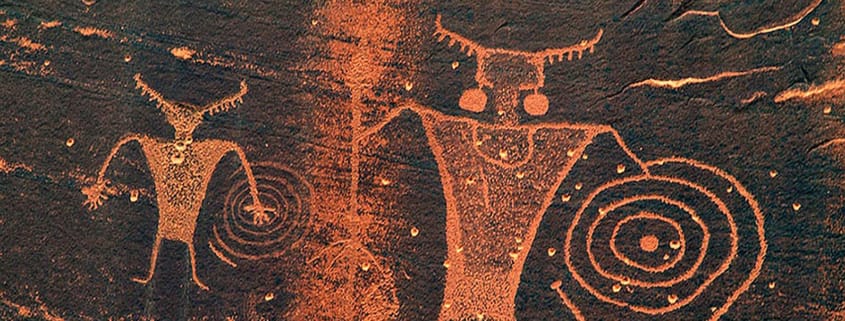
A people who saw the sea arrive where no sea belonged would not leave behind a peer-reviewed monograph. They would leave a story. And the descendants of that story would eventually be mocked by men who mistake their own notation for reality.


Catastrophe, in its original sense, denotes a turning point, not a failure. In far-from-equilibrium systems, such turning points are unavoidable. The choice is not between change and stability, but between managed inheritance and abrupt transmission. Noise is not the adversary of order. Unacknowledged drift is.

