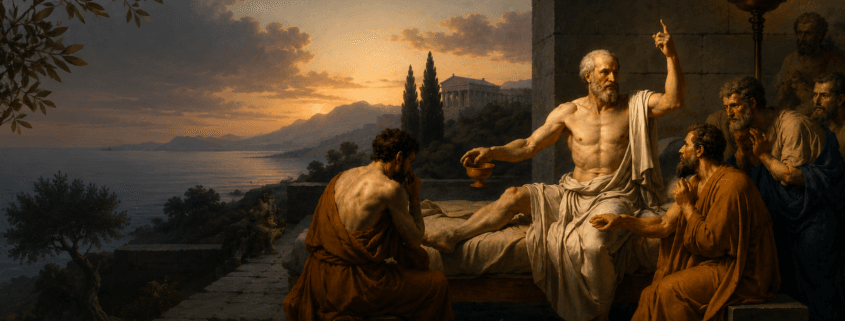
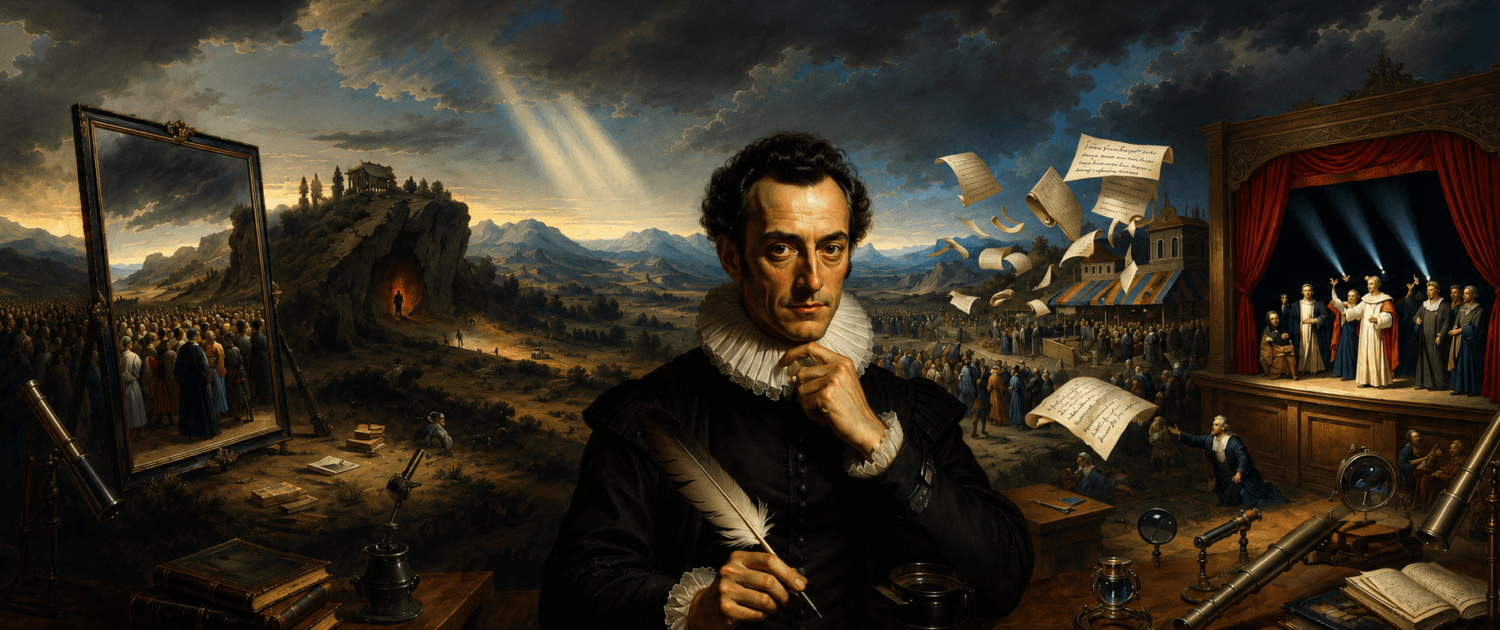
Francis Bacon, writing in the early years of the seventeenth century, understood that the first obstruction to knowledge is often not the world itself, but the human instrument by which the world is received. In the Novum Organum, he named these obstructions the “idols of the mind” – four persistent distortions that draw thought away from nature unless they are recognised, disciplined, and resisted. In Bacon’s framing, the idols were the preliminary obstacles that had to be cleared before genuinely empirical science could begin.
The first, and most universal, he named Idola Tribus – the Idols of the Tribe. These arise from human nature as such. Our senses are partial instruments, quick to register what impresses them and slow to detect what contradicts expectation. We seek symmetry, pattern, intention, and design even where the evidence does not warrant them. We move too readily from a few striking cases to general conclusions. We preserve confirming examples and let disconfirming ones fall quietly out of view. Bacon’s famous image remains exact: the human mind is like an uneven mirror, bending the rays of things according to its own shape. Modern language would speak of cognitive bias, pattern-recognition error, or the evolutionary tendency to infer agency from noise. But the underlying weakness is older than any vocabulary used to describe it.
The second class consists of the Idols of the Cave (Idola Specus). These are more private distortions. Each person inhabits a cave of his own, formed by temperament, education, reading, profession, habit, and accident. One mind is drawn instinctively to antiquity, another to novelty. The lawyer sees the world as precedent and contest; the mathematician as quantity and relation; the chemist as reaction and composition. Such lenses are not useless. Indeed, they often give inquiry its first traction. But they become dangerous when a favoured method hardens into an exclusive mode of seeing. Bacon understood that learning itself can narrow the aperture of thought. The more deeply one pursues a discipline, the more easily that discipline becomes not a tool for approaching reality, but a substitute for reality.
The third group, the Idols of the Marketplace (Idola Fori), arises from language. Human beings exchange words before they have secured the things those words are meant to signify. Language, in Bacon’s account, is a crowded market: noisy, useful, unstable, and prone to deception. Names are given to things that do not exist. Vague terms are treated as precise. Arguments over words masquerade as arguments over facts. Bacon had seen lawyers, theologians, and scholars spend enormous energy upon distinctions that had never been anchored in observation. Once a misleading term gains circulation, it can carry entire trains of reasoning away with it. The problem remains familiar: political slogans, inflated technical language, scientific terms used beyond their proper domain, and concepts that quietly import assumptions while appearing neutral.
The fourth and most imposing class is the Idols of the Theatre (Idola Theatri). These are the grand systems, doctrines, and inherited philosophies that arrange the world like a stage play. They possess structure, elegance, authority, and dramatic coherence; but their coherence may belong more to the performance than to nature. Bacon had in mind the scholastic inheritance, Aristotle’s categories, and all systems that compel facts to serve a pre-existing architecture. His objection was not to order itself, nor to the disciplined use of theory. It was to premature order: to the imposition of a finished scheme upon phenomena before the particulars have been allowed to speak. Nature, for Bacon, was not to be explained by allegiance to a theatre of inherited forms, but approached through patient attention to stubborn particulars.
Bacon’s warning was not that the mind can become perfectly cleansed of illusion, for the idols are too deeply rooted for that. Honest inquiry begins by admitting the distortions built into the inquirer. Observation must be disciplined. Experiment must be repeated. Generalisation must be delayed until the particulars have been adequately gathered, tested, and compared. The mind must be trained not to leap too quickly from resemblance to cause, from language to reality, or from system to truth.
Every contemporary field of knowledge still contends with tribal reflexes, private caves, unstable language, and persuasive intellectual theatres. The names have changed, but the structure of the danger has not. The work of clearing the idols is never complete. It is the permanent condition of serious thought.

“Two mighty meteors — of sun- and moon-like apparent size and shape — appear threateningly with their accompaniments. The star-world falls into turmoil, and the actual war begins: the Morning Star (Venus) opens it, standing on the back of Leo. Seven months later a new heaven results, as the Sun moves from about mid-Virgo to mid-Aries. The stars that ruled the dawning morning sky plunge at last into Okeanos and set the earth afire. Such is the fundamental thought — recognized only once facts beneath poetry’s veil are laid bare.”

The discovery forced a rewrite of what archaeologists thought they knew about underground construction in the ancient world. Before 1963, the largest known subterranean complexes were the Roman catacombs and the Basilica Cistern in Istanbul. Derinkuyu alone could hold twenty thousand people. Kaymaklı, nine kilometres away, was larger still. The two were probably connected by a tunnel whose ventilation shafts have since been filled with rubble.
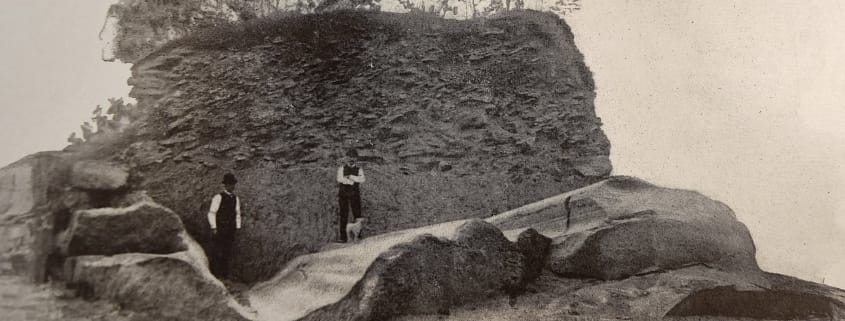
The drift is a remarkable stratum of clay, sand, gravel, and far-from-source boulders seemingly flung by some careless hand over the northern portions of Europe and North America. Some of this debris has been moulded into distinctive ridges (moraines), rounded hills (drumlins), and long sinuous ridges (eskers). Any theory of drift formation must account for these singular accumulations as well as an immense family of scratches, lake basins, and sundry gougings.

“Just as in the case of all other countries, the earliest pages in the Geological Record of South Africa are most fragmentary and utterly confusing; much remains to be done before even the outlines can be reconstructed. It must suffice to remark that at some extremely remote date, possibly more than 1000 million years ago, basic lavas—seemingly the earliest known of the rocks—were being poured out over several large sections of this country, in many places sub-aqueously—probably upon the ocean floor—that they were accompanied and followed by tuffs, slates, limestones, and the remarkable group of the banded ironstones, jaspilites, and cherts, and by quartzites, grits, and conglomerates.”
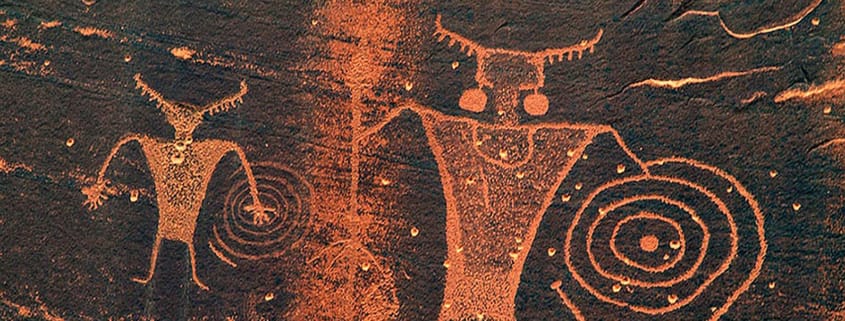
A people who saw the sea arrive where no sea belonged would not leave behind a peer-reviewed monograph. They would leave a story. And the descendants of that story would eventually be mocked by men who mistake their own notation for reality.