
Thirty years after its founding election, the Republic no longer needs most of its people to rule. To see why this is not a malfunction but an outcome, we begin where the word “democracy” began — and trace what it meant, and stopped meaning, across two and a half millennia.
Part I – The History of a Word
I. Greece: power, not permission
The English “democracy” descends directly from the Greek dêmokratia, a compound of dêmos and kratos. Neither half is neutral.
- Kratos meant power, strength — unambiguously. In its root sense it denoted the physical capacity of one party to overpower another by force.1 Power was not a permission but a capacity, tested and proven.
- Dêmos could mean “the people as a whole” — or, pointedly, “the masses,” the poor majority.1 The word for popular rule was born from the poorer many, not an undifferentiated nation.
The term did not begin as a compliment. It entered Greek political life in the fifth century BCE as a polemical banner — “a fighting slogan of class and party” — contested by those who thought the dêmos unfit to rule.1 Demokratia named, in its original context, not representative government but a direct arrangement: citizens assembled, deliberated, and held office-holders accountable — sometimes by the ultimate sanction of their collective physical strength.
II. Aristotle (c. 335–323 BCE): democracy as deviance
Aristotle systematised what his predecessors observed. In the Politics, he arranged constitutions into six forms by asking who rules — one, few, or many — and whether they rule for the common good:
| Correct form (common interest) | Deviant form (self-interest) | |
|---|---|---|
| One rules | Kingship | Tyranny |
| Few rule | Aristocracy | Oligarchy |
| Many rule | Polity | Democracy |
The key point: for Aristotle, “democracy” was the deviant form of majority rule — the poor ruling in their own interest. The correct form, which he called polity, blended democracy with oligarchy, and ideally gave a large middle class the decisive voice.2 Modern usage has taken the word Aristotle used for mob-rule-by-the-poor and turned it into a term of approval — while dropping his concern that rule by any single interest is corruption.
“That the middle [constitution] is best is evident, for it is the freest from faction: where the middle class is numerous, there least occur factions and divisions among citizens.”— Aristotle, Politics, IV.11
III. Rousseau (1762): free only on election day
The next decisive move came from Jean-Jacques Rousseau in Of the Social Contract. Sovereignty, he argued, is inalienable: it cannot be transferred to representatives any more than one person’s will can be obeyed by another. Elections therefore do not exercise freedom — they surrender it.
“The English people thinks itself free; it greatly deceives itself. It is free only during the election of members of Parliament: as soon as they are elected, it is enslaved and counts for nothing.”— Rousseau, Of the Social Contract, Book III ch.15 (1762)
The ritual — choose which faction misrepresents you, then go home — was, for Rousseau, the democratic abdication of democracy: “the people” exercise sovereignty for a day so it can be exercised over them for years after. We will return to this sentence in Part II.
IV. Madison (1787): the counter-position
No survey of this argument is honest without its strongest rebuttal, and that is James Madison’s. Writing as “Publius” in Federalist No. 10 (November 23, 1787), he conceded Aristotle’s and Rousseau’s worry about direct democracy and turned it into an argument for representation:
“A pure democracy… can admit of no cure for the mischiefs of faction…. Hence it is that such democracies have ever been spectacles of turbulence and contention; have ever been found incompatible with personal security or the rights of property; and have in general been as short in their lives as they have been violent in their deaths. A republic, by which I mean a government in which the scheme of representation takes place, opens a different prospect.”— Madison, Federalist No. 10 (1787)
Madison’s claim is that a large republic — many factions, big territory, representatives who “refine and enlarge the public views” — cures faction. This became the intellectual foundation of every modern representative system.
The safeguard carries an assumption Madison underweighted: it presumes representatives are chosen by an engaged, informed people whose views they genuinely refine. When participation collapses, when office becomes spoils worth killing for, and when a donor class finances both candidates and the media that frame them, representation stops refining anything — it becomes rule by the few legitimised by an electoral form. Madison answered Aristotle; he did not answer Marx.
V. Tocqueville (1840): soft despotism
Alexis de Tocqueville, in Democracy in America, predicted that democratic societies would not fall to a tyrant but dissolve into an all-powerful bureaucratic state that slowly infantilises its citizens.
“It covers the surface of society with a network of small complicated rules, minute and uniform, through which the most original minds and the most energetic characters cannot penetrate… Such a power does not destroy, but it prevents existence; it does not tyrannize, but it compresses, enervates, extinguishes, and stupefies.”— Tocqueville on “soft despotism,” Democracy in America, Vol. II (1840)
Tocqueville matters to the South African case because its coercion is not overt tyranny — it falls as bureaucracy, policing and impunity rather than dictatorship.
VI. Marx & Engels (1848): the executive committee
The Manifesto of the Communist Party, written late 1847 and published February 24, 1848, is not a celebration of democracy but an autopsy of what it had become.
“The bourgeoisie has at last… conquered for itself, in the modern representative State, exclusive political sway. The executive of the modern state is but a committee for managing the common affairs of the whole bourgeoisie.“— Marx & Engels, The Communist Manifesto, Section I (1848)
But there is a second, less-quoted half to their account. In Section II they declare the point of working-class politics:
“The first step in the revolution by the working class is to raise the proletariat to the position of ruling class, to win the battle of democracy. The proletariat will use its political supremacy to wrest, by degree, all capital from the bourgeoisie…”— Marx & Engels, The Communist Manifesto, Section II (1848)
“Democracy” for them was not a settled condition but a battlefield: whoever holds political supremacy uses the state’s power. This is why they scorned “Conservative or Bourgeois Socialism,” which promised reforms while leaving the distribution of power untouched:
“They appeal to society at large, without distinction of class; nay, by preference, to the ruling class… Hence, they reject all political… action; they wish to attain their ends by peaceful means.”— Marx & Engels on “Bourgeois Socialism,” Manifesto, Section III.2 (1848)
And in the appendix added for this edition — Marx’s address on the Paris Commune of 1871, the most concrete experiment of their politics — they attack exactly the ritual that Part II is about:
“Instead of deciding once in three or six years which member of the ruling class was to misrepresent the people in Parliament…”— Karl Marx, address on the Paris Commune (included in this edition of the Manifesto)
“Deciding once in three or six years which member of the ruling class was to misrepresent the people” is, in a sentence, the entire thesis that follows. South Africa has refined it: citizens are asked every five years whether they want this faction or that one — drawn from a donor-financed, office-as-spoils political class. And now, increasingly, even the ritual is refused.
VII. Schumpeter (1942): how democracy became procedure
The final historical turn explains how we got here. For most of Western history “democracy” retained some echo of its Greek meaning — the people’s capacity to govern themselves. In 1942 Joseph Schumpeter stripped that out in a definition that became canonical across political science:
“The democratic method is that institutional arrangement for arriving at political decisions in which individuals acquire the power to decide by means of a competitive struggle for the people’s vote.”— Schumpeter, Capitalism, Socialism and Democracy, ch.22 (1942)
No common good, no general will, no citizen self-rule: democracy has been redefined as a procedure for choosing rulers through competition. The people do not govern; they select among competing elites and then “elect or evict.” This is the hinge of our argument — it explains why a state can score well on procedural indices (free elections held, courts nominally independent) while its substance drains away.
VIII. What the word now means
Four distinct senses have accreted onto one word:
- The ancient sense (power of the dêmos): ordinary people actually holding sovereignty.
- Aristotle’s deviant sense: rule by the poor in their own interest, set against a mixed “polity.”
- The modern liberal-representative sense (Dahl’s “polyarchy”): competitive elections, universal suffrage, free press & association, independent institutions. This is what V-Dem measures.
- The Marxist-critical sense: class rule in which elections legitimise the state but leave ownership and power untouched — procedure without substance until it becomes “the battle” won by the many.
South Africa sits at the fault line between senses 3 and 4: it holds competitive elections (sense 3’s forms), but on our data — ~40% participation, coercion tracking value-of-office not service, a donor class financing both parties and much of the media — it increasingly resembles sense 4. The procedures remain; the substance that would make them meaningful has collapsed.
IX. Where we stand now: measured decline
The contemporary measurement consensus (V-Dem) tells a sobering story, and South Africa’s place in it is more fragile than its “free and fair elections” reputation suggests:4
- As of end-2024 there were more autocracies (91) than democracies (88) worldwide — the first time in over twenty years. Only ~29 countries remain liberal democracies, the least common regime type.
- The global average level of democracy is back to roughly its 1996 value by country-average and a new 50-year low by GDP-weighted measure — a near-10% drop from the 2012 peak.
- South Africa’s liberal-democracy index peaked around 0.66 in 2010, dipped (V-Dem records it losing its “liberal democracy” status for a period beginning ~2013), and has been volatile since — registering 0.60–0.65 through the late 2010s and into 2024.
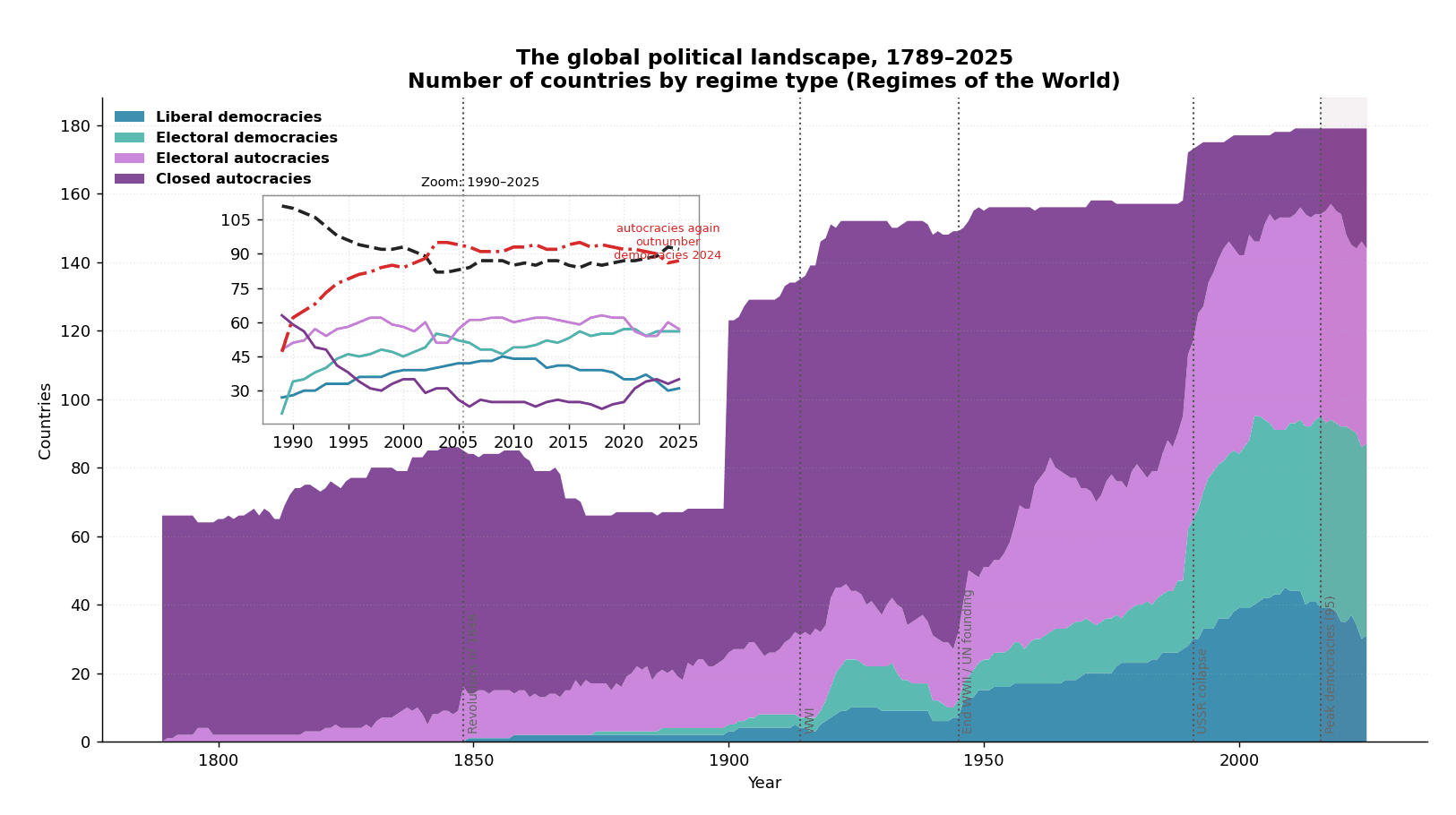
The long arc: autocracies dominate for two centuries, democracies surge after the Cold War, and from ~2024 autocracies again outnumber them. Counts follow Regimes of the World (V-Dem / OWID); note figures shift slightly across V-Dem report editions.
| South Africa, V-Dem Liberal Democracy Index | Value (0–1) |
|---|---|
| Peak (2010) | ~0.66 |
| 2023 | 0.600 |
| 2024 (latest) | ~0.65 |
The paradox is that these scores — which place South Africa among the continent’s best-performing democracies on paper — coexist with a participation collapse (~40% of adults voting), a police-misconduct accountability rate under one percent, and partisan violence over municipal office. The institutional machinery V-Dem measures can be intact while the thing the word originally named — power actually exercised by ordinary people — quietly drains away.
Part II — South Africa, 1994–2026
X. Four in ten
In May 2024, sixteen-point-three million South Africans voted for a national government. The official turnout figure quoted everywhere was 58.6%. What that number actually measures is the share of registered voters who bothered to show up — and registration itself has been quietly decaying for two decades.
The more honest denominator is the voting-age population: every adult entitled, by law, to have a say. By that measure only about four in ten eligible adults cast a ballot. Six in ten did not. The media never lead with this figure, and it matters — because everything that follows depends on understanding how small the consenting coalition really is.
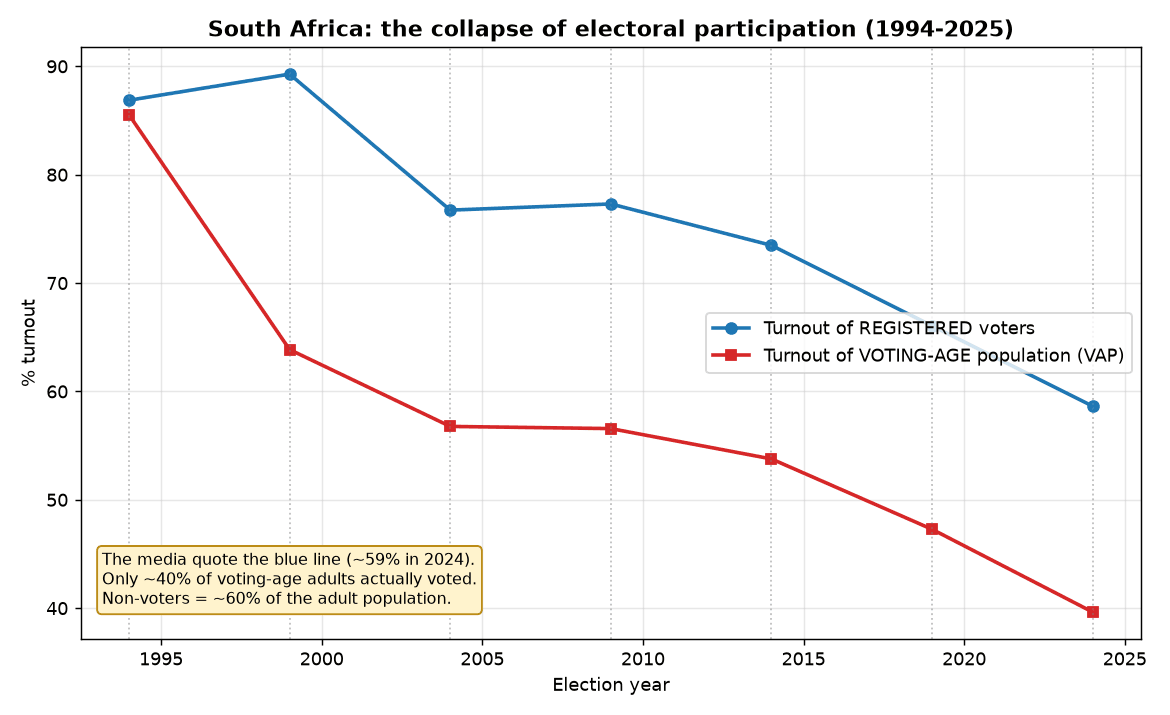
The media quote the blue line (58.6% in 2024). Only ~40% of voting-age adults actually voted. Non-voters are now roughly 60% of the adult population.
This is not a blip or an unusually quiet election. It is the terminal point of a thirty-year decay curve that began at near-universal mobilization:
| Election | Turnout of registered (%) | Turnout of voting-age population (%) |
|---|---|---|
| 1994 | 86.9 | 85.5 |
| 1999 | 89.3 | 63.9 |
| 2004 | 76.7 | 56.8 |
| 2014 | 73.5 | 53.8 |
| 2019 | 66.1 | 47.3 |
| 2024 | 58.6 | 39.6 |
The voting-age-population turnout fell 45.9 percentage points in thirty years. No comparable democracy lost participation at this rate. And the decline is overwhelmingly generational: only about a quarter of eligible 18–19-year-olds and half of those aged 20–29 even registered, while over nine in ten South Africans past fifty are on the roll.10 The people who no longer participate are precisely the young and the poor — the same people most likely to be policed by the state they have declined to authorize.
XI. The mandate that isn’t
Weber’s definition of the state is still the one scholars reach for: an institution claiming a monopoly on legitimate force within its territory.11 The word doing the work is legitimate. A government can wield enormous coercive power; what it cannot do, in principle, is wield it and simultaneously claim it flows from “the will of the people” when a majority have withdrawn from authorizing it.
The essays collected at nobulart.com — Sherrer’s Voting Is an Act of Violence, his later Non-Voting as an Act of Secession, Larken Rose, Stefan Molyneux — press this to its conclusion: that voting is what launders state force into legitimacy, and abstention is the citizen’s one honest refusal.12 Whatever one makes of that claim in general, South Africa gives it a concrete shape. When only four adults in ten choose their rulers, every subsequent exercise of police power against the six who did not rests on consent they never gave.
“The authority for each and every one of the government’s actions is presumed to flow from the consent of the people through the electoral process.” — Hans Sherrer, Voting Is an Act of ViolenceThe Monopoly on Violence collection, nobulart.com
But there is a second, less comfortable reading. The young abstainers are not principled secessionists. They did not organize withdrawal; they simply stopped being asked to believe. Their non-participation reads less like Sherrer’s deliberate refusal and more like exhaustion with a promise that failed. And the state they have abandoned does not notice — because, as we are about to see, it no longer needs them.
XII. The coercion nobody reports
South Africa’s “state violence against civilians” is a category that standard human-rights indices get almost exactly wrong. On the V-Dem physical-integrity scale — freedom from political killings and torture by the government — South Africa scores in the top third of all countries, around 0.85.13 That is because post-apartheid there have been no large-scale regime campaigns of terror. The index measures regime terror, and on that narrow axis, the country looks clean.
The reality at ground level is very different. Four separate registers are needed to see it:
- Regime terror (what the indices measure). V-Dem physical-integrity ~0.85, top-third globally. No mass political-killing campaigns since 1995. This is why standard measures call SA “fine.”
- Police lethality (what citizens actually meet). IPID/SAPS record roughly one person killed by police every day. The per-capita rate is the second-highest in our comparator set — about twenty-five times Germany’s, well above the United States.14
- Partisan political violence (the largest direct threat to politics). 488 politically-motivated assassinations between 2000 and 2023. In one five-year window, Parliament logged 59 councillors and 37 municipal officials murdered — overwhelmingly in KwaZulu-Natal, where factional contests for control of councils (and their procurement budgets) turn lethal.14
- State-tolerated collective violence. Xenophobic attacks have killed over six hundred people and displaced more than a hundred thousand since 2008, largely unpoliced. The July-2021 unrest claimed ~350 lives amid both state incapacity and vigilante reprisal.14
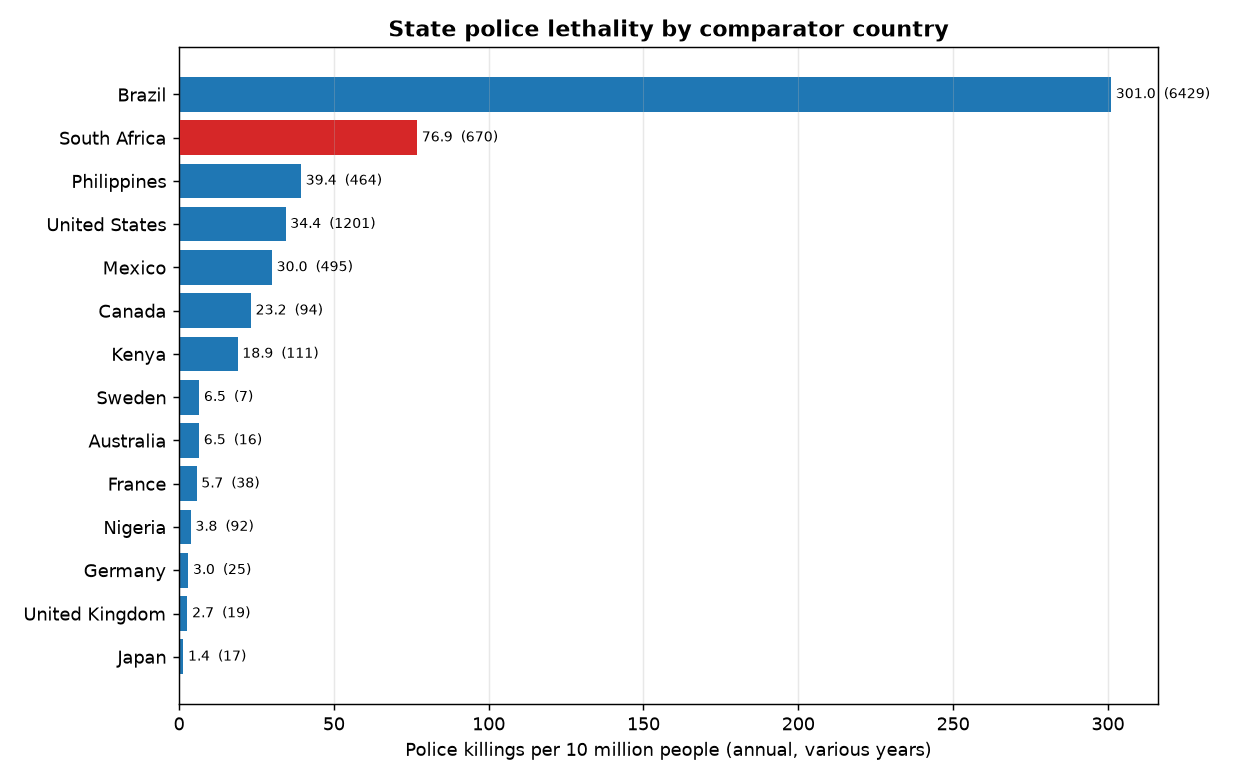
Police lethality per capita, selected countries. South Africa (~77 per 10M) sits second only to Brazil.
The state whose force falls on civilians is simultaneously ineffective — barely one in seven murders are solved, violent crime has risen for years — and unaccountable. IPID registered some 75,000 complaints against police between 2012 and 2025. From those came just over four hundred dismissals. About half of one percent.15
A coercive apparatus that can neither protect people nor be held to account is not a malfunctioning instrument of order; it is an instrument of rule. And the citizens on whom it falls are disproportionately the same poor, young, unregistered majority who no longer authorize it.
XIII. The violence over office
The single most important finding from assembling this dataset — and one that must be stated against my own prior expectation — is that South Africa’s partisan political violence does not concentrate where participation collapses. I tested this at province level (nine provinces, IEC participation joined to GI-TOC assassination data and parliamentary records of municipal official/councillor murders).16
| Measure (province-level, n=9) | Spearman ρ |
|---|---|
| Councillor murders × turnout | +0.29 |
| Municipal official murders × turnout | +0.59 |
| Political assassinations (2023) × turnout | +0.54 |
The correlations are positive, not negative — and the strongest runs against the intuition that violence follows apathy. KwaZulu-Natal has above-average participation (78% registration, 62% turnout) and by far the most targeted political violence: twenty-one councillors and seventeen officials murdered in a five-year window. Gauteng — the province with the lowest registration rate of all — saw comparatively few.
The driver is not participation collapse but contested control of state resources. Office is worth killing for. Whether citizens vote is almost beside the point.
A municipal-level test (8 metropolitan municipalities) was also attempted with ACLED event-geodata, but it proved uninformative: all metros are low-turnout urban units clustered within a five-point band (42–47%), so there is no participation gradient to correlate against coercion. The high coercive-event counts concentrate in the largest metros simply because they hold the most people and political activity.16
This reframes everything. The people fighting are not the apathetic majority seeking representation; they are a political class and its criminal patrons competing over who will hold the machinery that pays. The collapse in participation happens alongside this — not as its cause, but as its shadow.
XIV. Follow the money
The question nobody asks when turnout collapses is who profits from a system that no longer needs voters. The answer, in South Africa, is concentrated and documented — because since 2021 the Party Funding Act has forced disclosure.17
Two parties captured more than 73% of all party funding. The Democratic Alliance’s largest benefactors are the Oppenheimer family (roughly R60 million spread across opposition parties) and Capitec founder Michiel le Roux, whose Fynbos entities supplied about a third of the DA’s war chest. Martin Moshal — the Betway fortune — funded multiple opposition vehicles at once.
The governing ANC drew more than half its declared private money from its own trusts (Batho Batho, Chancellor House) and a quarter from mining majors — United Manganese of Kalahari, Harmony Gold, African Rainbow Minerals, the last two linked to billionaire Patrice Motsepe. Naspers gave R2 million each to the ANC and the DA.17
Now add the media layer:
- Naspers owns News24, South Africa’s largest news platform — and donates to both major parties.
- The Oppenheimers, historically through Anglo American’s press holdings, still concentrate political donations while their mining legacy persists.
- Arena Holdings (TimesLIVE, Sunday Times), Sekunjalo/Independent Media, Caxton and the donation-funded Daily Maverick complete a media map whose ownership overlaps the donor class.17
The structural point is not conspiracy; it is incentive. When a narrow set of private fortunes and extractive industries funds both the governing party’s machine and much of the journalism that frames its legitimacy, there is no mechanism by which falling participation produces change. The donors’ access and contracts are independent of how many citizens vote — indeed, an exhausted, atomized electorate is easier to ignore.
XV. State capture as the deep structure
None of this is new under this administration. The Zondo Commission quantified it: R57 billion in public funds tainted by state capture, with more than 97% of that siphoned through just two entities, Transnet and Eskom — the very SOEs at the heart of today’s energy and logistics crises. The Gupta enterprise alone took an estimated R15–16 billion.18
Broader corruption-era losses are estimated as high as half a trillion rand. Recoveries stand in the low tens of billions, and there have been essentially no successful prosecutions of prominent figures. The impunity is itself the message: holding office pays regardless of whether you serve — or whether anyone voted for you.
XVI. The other pole
Set South Africa against the model now in vogue across the hemisphere and the thesis sharpens by contrast. Nayib Bukele, president of El Salvador: “There is no State that cannot put an end to crime. If a State fails to put an end to crime in its country, it is because criminals are part of the government.”
It is a seductive line — and South Africa’s own evidence gives it teeth. When officials inside Eskom were siphoning billions while load-shedding darkened homes; when municipal office-as-spoils drives assassinations; when police misconduct goes 99% unsanctioned — “criminals are part of the government” is not metaphor.
Bukele’s own account makes his first claim explicit. Interviewed on his re-inauguration, he described the El Salvador he inherited in terms that invert Weber outright: “the real government was the gangs just like in Haiti you have a fake government… the real government of Haiti is the gangs.” This is not hyperbole — it is dual sovereignty. Before 2022 MS-13 held territory, ran its own prisons from inside, and collected extortion as taxation; the nominal state could not contest that monopoly on force in most of the country. He calls this the precondition for everything else: “you need peace… you have to start with peace,” because no government can tax, build or educate where it does not control violence.19
Yet his own numbers should make us wary of importing his framing wholesale. In the same interview he claims “no civilian casualties” and only eight dead security personnel in the entire war on gangs — a figure that survives only if police-action deaths are reclassified out of “civilian,” which is precisely the metric-definition game this study documents for South Africa’s IPID. And his explanation of why Western states cannot do what El Salvador did quietly concedes the systemic point: “the problem with democracy… is that politicians have a great incentive to give away the treasury.” The failure, by his own account, is not incompetence but an incentive structure — exactly the captured-monopoly diagnosis this essay draws from South Africa’s donor-and-media data. Nor did the homicide decline he claims begin under him: rates fell about 50% under his predecessor between 2015 and 2018, from a peak near 105 per 100,000.19
| El Salvador metric | Value |
|---|---|
| Homicide rate peak (2015) | ~105 / 100k |
| Rate before Bukele took office (2018) | ~53 / 100k |
| Claimed rate by 2024 | ~1.9 / 100k |
| State of emergency, Mar 2022 → | suspended constitution; extended 20+ months |
| People arrested (to late-2023) | >77k (>1% of population) |
| Prisoners as share of national population | ~105k ≈ 1.7% |
The decline was achieved via mass detention without due process, torture allegations, and a prison system holding nearly two percent of the country. Analysts note that police killings, prison deaths and discovered remains may be excluded from official homicide tallies — which could inflate the claimed 2023 rate by up to half.19
The uncomfortable parallel: El Salvador manufactured acclamation through fear of crime and effective, unaccountable force. South Africa has collapsed into apathy alongside ineffective, unaccountable force. Both are failures of consent. Bukele’s model does not show that “a working system encourages participation” — it shows how coercion can substitute for consent altogether.
Read the two poles together and a single structure emerges with different faces. In El Salvador and Haiti the gangs held a rival monopoly on force, so the nominal state had to reconquer its territory by abandoning due process — replacing one coercion without consent (the gang’s) with another (the security state’s), merely more efficient. In South Africa and much of the West, capital has captured the legitimate monopoly instead: a donor class finances both parties and much of the media, so that the state serves narrow interests while participation collapses — coercion without consent, conducted through institutions rather than against them. One fails openly (gang territory), the other fails politely (a ballot you may cast but cannot bind). Neither is “a working system encouraging participation”; both are coercive orders whose claim to popular authorization has become fictional. The difference between San Salvador and Johannesburg is not that one respects consent and the other does not — it is that Bukele’s state dispenses with the pretense, while South Africa still stages it.
XVII. The illusion
The rituals remain in place. Every five years, sixteen million people go to the polls; parties raise and spend hundreds of millions; journalists report turnout “of registered voters”; a government is formed and claims to speak for the nation.
What holds South Africa together, in truth, is not the consent of forty percent — it is the combination of a state’s residual capacity for coercion, a donor class with no interest in disruption, and an exhausted public that has stopped expecting change. That is not democracy failing occasionally. It is the illusion of consent operating as the real system.
The arc from Athens to Johannesburg closes: “deciding once in three or six years which member of the ruling class was to misrepresent the people” — and now, for sixty percent of adults, declining even that.
Notes & sources
- Etymology of dêmokratia, ambiguity of dêmos, kratos-as-capacity: P. Cartledge, “Democracy: A User’s Guide,” History Today; D. Cammack, “The Kratos in Dêmokratia” (Yale).
- Aristotle’s six-fold classification and polity/mixed-constitution doctrine: Stanford Encyclopedia of Philosophy, “Aristotle’s Political Theory”, citing Politics III.7 & IV.11.
- Rousseau, Of the Social Contract, Bk III ch.15 (“The English people thinks itself free…”), 1762; quoted from Victor Gourevitch ed., Cambridge UP (1997), p.114; discussion in New Yorker, “How Rousseau Predicted Trump”.
- Madison, The Federalist No. 10, New York Packet, 23 Nov 1787; text at Avalon Project (Yale).
- Tocqueville, Democracy in America, Vol. II Bk IV ch.6 (“That kind of despotism which democratic nations have to fear”), on the network of small complicated rules; trans. Reeve/Bowen.
- Schumpeter, Capitalism, Socialism and Democracy (Harper & Brothers, 1942), chs 21–22; definition at p.269; text digitised at archive.org.
- All quotations from The Manifesto of the Communist Party: Marx/Engels Selected Works Vol. One, Progress Publishers (Moscow, 1969), pp.98–137; trans. Samuel Moore with Engels, 1888; transcript at Marxists Internet Archive. Repository copy: ~/ECDO/RAG/Manifesto.pdf. The Paris Commune address (“The Civil War in France”, May 1871) was composed by Karl Marx; the 1891 edition’s preface is by Engels.
- V-Dem Democracy Report 2024 (“Democracy Winning and Losing at the Ballot”): PDF; SA liberal-democracy index via TheGlobalEconomy / V-Dem.
- IEC certified voters’ roll & Stats SA voting-age population projection, May 2024 (39.75M VAP); age-band registration from IEC/SABC reporting. Source: IEC 2024 National Ballot Voter Turnout.
- Max Weber, Politics as a Vocation, in Gerth & Mills, eds., p.78. Text at Wikipedia (Politics as a Vocation); collected at nobulart.com.
- Hans Sherrer, “Voting Is an Act of Violence” (1999) and “Non-Voting as an Act of Secession” (2001), collected at nobulart.com/the-monopoly-on-violence/.
- IPID annual reports & Viewfinder Police Accountability Tracker (75,308 cases Apr-2012–Mar-2025); GI-TOC assassination data; Xenowatch.
- IPID complaints & sanction counts via Viewfinder tracker and Africa Check; 437 dismissals / 496 imprisonments from ~75k cases (see note 14).
- Province/municipal C1/C1b test: methodology in the consent-violence method notes (§13 above); ACLED SA events + IEC turnout; honest negative result.
- IEC political funding disclosures under the Party Funding Act (effective Apr-2021); MyVoteCounts analysis of IEC annual report FY2023/24; Daily Maverick party-funding graphics, Mar-2024.
- Zondo Commission final reports (June-2022); Mail & Guardian estimate.
- Bukele–Carlson interview (recorded ~his 2026 re-inauguration; 65-min, local transcript): “the real government was the gangs… you have a fake government”; “you need peace… you have to start with peace”; claims of no civilian casualties and eight dead security personnel; “politicians have a great incentive to give away the treasury.” For the counter-evidence: Congressional Research Service IN12510; InSight Crime, “El Salvador’s Perpetual State of Emergency”; HRW World Report 2024: El Salvador.

There is one field of knowledge where our ancestors were centuries, sometimes millennia, ahead of their own best technology. Not engineering. Not metallurgy. Not writing.
Watching.

“Two mighty meteors — of sun- and moon-like apparent size and shape — appear threateningly with their accompaniments. The star-world falls into turmoil, and the actual war begins: the Morning Star (Venus) opens it, standing on the back of Leo. Seven months later a new heaven results, as the Sun moves from about mid-Virgo to mid-Aries. The stars that ruled the dawning morning sky plunge at last into Okeanos and set the earth afire. Such is the fundamental thought — recognized only once facts beneath poetry’s veil are laid bare.”
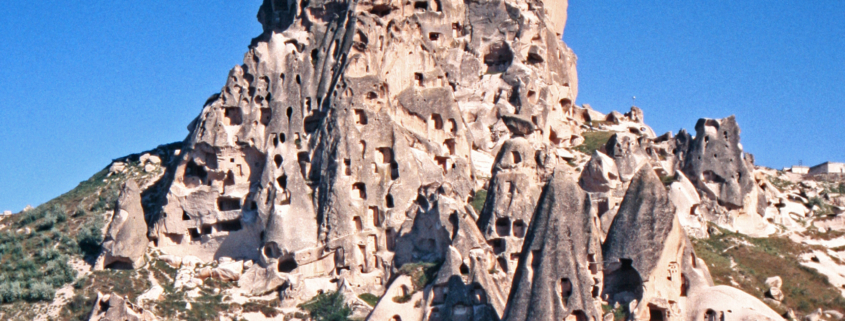
The discovery forced a rewrite of what archaeologists thought they knew about underground construction in the ancient world. Before 1963, the largest known subterranean complexes were the Roman catacombs and the Basilica Cistern in Istanbul. Derinkuyu alone could hold twenty thousand people. Kaymaklı, nine kilometres away, was larger still. The two were probably connected by a tunnel whose ventilation shafts have since been filled with rubble.
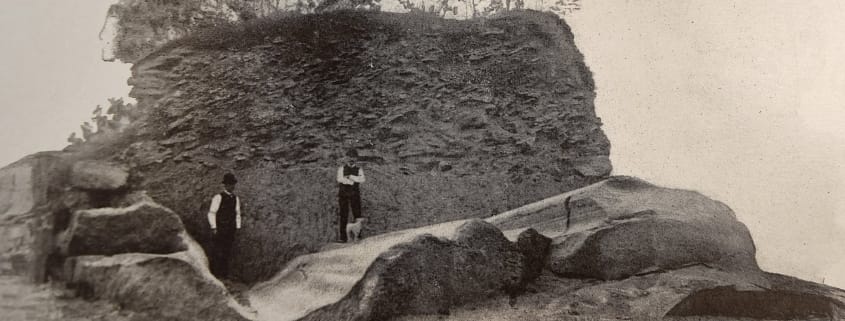
The drift is a remarkable stratum of clay, sand, gravel, and far-from-source boulders seemingly flung by some careless hand over the northern portions of Europe and North America. Some of this debris has been moulded into distinctive ridges (moraines), rounded hills (drumlins), and long sinuous ridges (eskers). Any theory of drift formation must account for these singular accumulations as well as an immense family of scratches, lake basins, and sundry gougings.

“Just as in the case of all other countries, the earliest pages in the Geological Record of South Africa are most fragmentary and utterly confusing; much remains to be done before even the outlines can be reconstructed. It must suffice to remark that at some extremely remote date, possibly more than 1000 million years ago, basic lavas—seemingly the earliest known of the rocks—were being poured out over several large sections of this country, in many places sub-aqueously—probably upon the ocean floor—that they were accompanied and followed by tuffs, slates, limestones, and the remarkable group of the banded ironstones, jaspilites, and cherts, and by quartzites, grits, and conglomerates.”
The first obstruction to knowledge is often not the world itself, but the human instrument by which the world is received.

